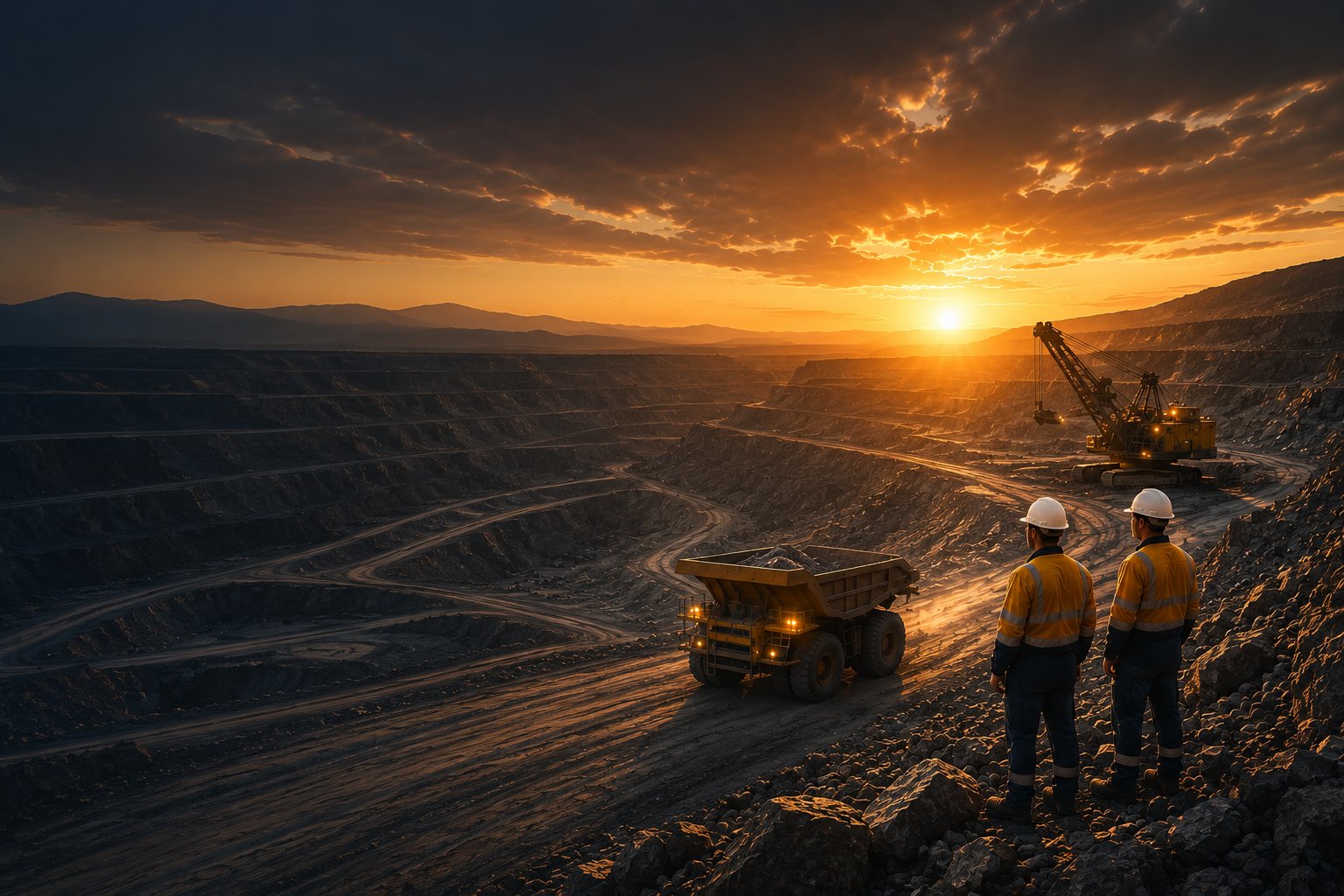
Industrial operational environment — mining site at dusk

Senior Advisor — Human Factors & Risk

Improving Decision-Making and Risk Awareness in High-Pressure Environments

Working with senior leaders in mining and complex operations to strengthen safety, situational awareness, and performance under pressure.

Core Insight

Why Risk Is Missed

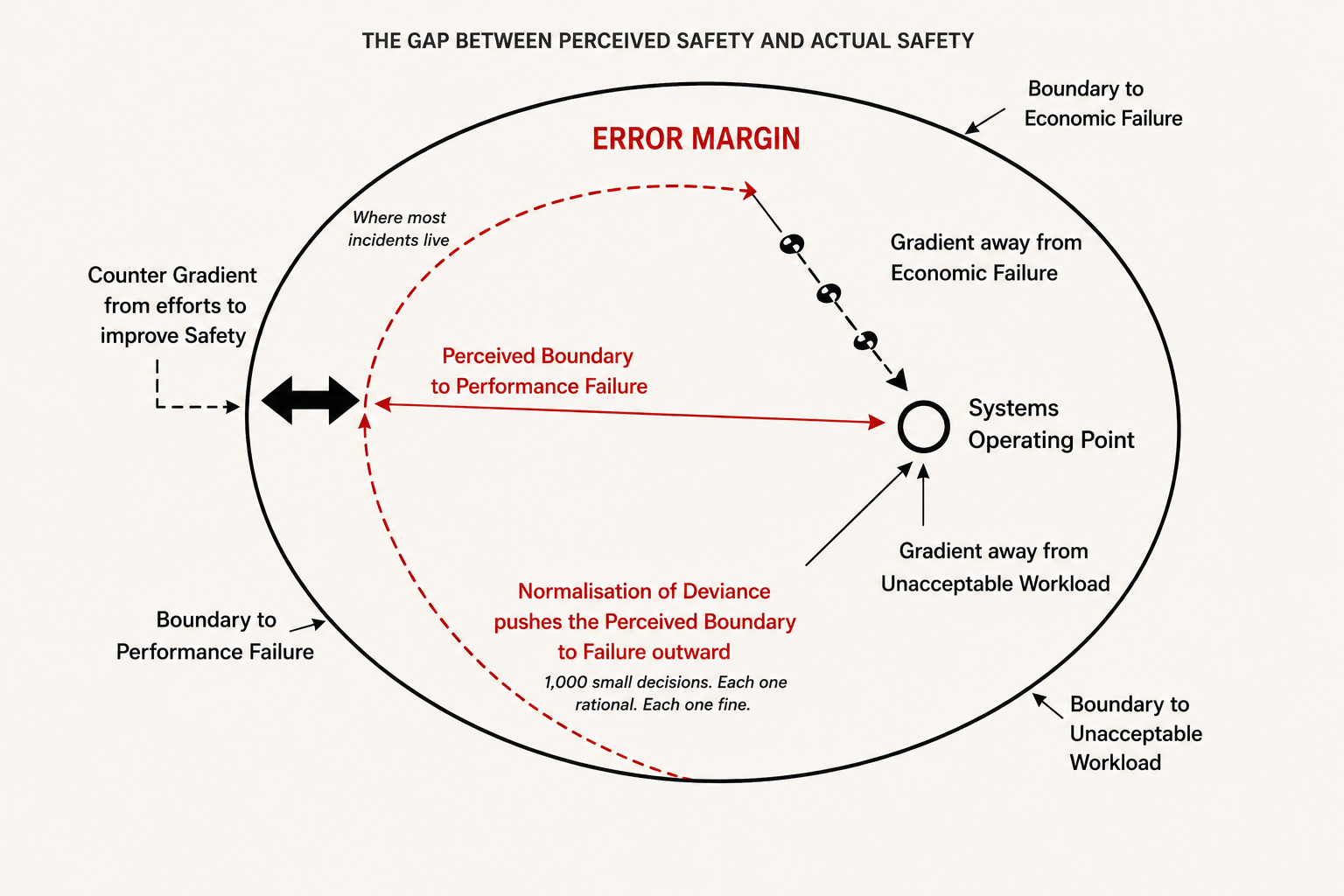
Incidents do not happen because people do not care. They happen because the conditions in which people operate systematically undermine the behaviours that prevent them.

Awareness narrows under pressure

When people are under stress, cognitive bandwidth contracts. What was visible becomes invisible. Decisions are made with less information than the situation demands.

Fear suppresses speaking up

In cultures where challenge is unwelcome, weak signals go unreported. The person closest to the hazard stays silent — not because they lack awareness, but because they perceive the cost of speaking as too high.

Weak signals go unnoticed

Incidents rarely arrive without warning. The precursors exist — but they are filtered out by familiarity, time pressure, and an environment that rewards output over observation.

Systems fail when humans are in survival mode

Even the best-designed safety systems depend on humans operating in a functional state. When threat responses dominate, rules become obstacles and procedures become a formality.

About Stephan

Bridging Systems, Human Behaviour, and Environment

With over 25 years working inside mining operations and complex capital projects, Stephan de Beer brings a practitioner's understanding of how risk actually manifests — not in policies, but in people.

His work focuses on the human factors beneath incidents: the pressures, perceptions, and behavioural patterns that standard safety systems rarely reach. He operates at executive and leadership level, helping organisations understand why their systems are not delivering the safety performance their architecture promises.

Stephan works at the intersection of systems design, human behaviour, and the operating environment — identifying the conditions that drive unsafe behaviour before incidents make them visible.

Clients have included

Rio TintoAnglo AmericanHarmony

25+

Years of experience

Mining, Capital Projects, Heavy Industry

Sectors

Operations across multiple continents

Global exposure

Stephan works directly with executive teams — not through intermediaries. Every engagement is shaped by the specific organisation, its operating environment, and the challenges its leadership is navigating.

The Hidden Layer of Risk

The Conditions That Shape Behaviour

Below the surface of most safety failures lies a set of conditions that are rarely examined and almost never addressed. These are the environmental forces that determine how people actually behave — regardless of what the procedure says.

Job insecurity

Workers and supervisors operating under threat of retrenchment default to compliance over candour. Short-term contracts compound this dynamic.

Labour and contractor structures

Fragmented workforce arrangements dilute accountability and reduce the psychological safety required to raise concerns without consequence.

Economic pressure on operations

Production targets create environments where speed displaces safety not through intention, but through the accumulated weight of daily expectation.

Leadership environment

How senior leaders respond to bad news, near-misses, and challenge determines whether the organisation learns — or suppresses the signals it most needs.

Neuroscience of Performance

Threat State vs. Performance State

When the brain perceives threat — whether physical, social, or economic — it activates an “away” response. The neurological resources required for high-quality safety-critical performance shift away from the prefrontal cortex toward survival circuitry. This is not a character flaw. It is physiology.

Understanding this dynamic is foundational to understanding why incidents happen in organisations that have invested heavily in safety systems.

When people operate in a threat state

  • Reduced situational awareness
  • Impaired decision-making quality
  • Lower capacity for learning
  • Reduced tolerance for ambiguity

How Stephan Works

A Structured, Diagnostic Approach

Not a workshop. Not a keynote. A rigorous, evidence-based process that works at the level where safety culture is actually formed — executive leadership.

01

Diagnose the leadership and operating environment

Before any recommendations, Stephan builds a detailed picture of the environment in which people are operating — the pressures, incentives, hierarchies, and cultural dynamics that shape daily behaviour.

02

Identify hidden human risk factors

Working with leadership teams and, where appropriate, the broader workforce, Stephan surfaces the conditions, perceptions, and patterns that conventional safety audits are not designed to find.

03

Align leadership behaviour and system design

Safety performance is downstream of leadership behaviour. Stephan works directly with executive teams to ensure their behaviour is aligned with the psychological safety and performance conditions the organisation needs.

04

Strengthen awareness and decision-making under pressure

The final phase focuses on building practical capability — improving situational awareness, decision quality, and risk detection across the leadership layer.

Frameworks & foundations

Human Factors

Understanding the interaction between people, systems, and environment

Neuroscience of Safety

How threat and performance states shape decision-making

SCARF Model

Status, Certainty, Autonomy, Relatedness, Fairness — the social drivers of behaviour

What This Improves

Measurable Outcomes

The work is oriented toward concrete, observable changes in how organisations detect, discuss, and respond to risk.

Earlier risk detection

Leaders and teams identify developing risks before they escalate — not because they try harder, but because the conditions for awareness are in place.

Stronger situational awareness

Improved ability to read environments, notice deviations, and maintain an accurate picture of operational state under pressure.

Better decision-making under pressure

Leaders operate with greater clarity in high-stakes situations, drawing on improved cognitive capacity and reduced threat response.

Increased speaking up

Workforces and teams surface concerns, near-misses, and weak signals — because the environment makes doing so safe and worthwhile.

More effective safety systems

Systems that were technically sound but behaviourally undermined begin to function as designed, with human factors aligned rather than working against them.

Leadership confidence in risk conversations

Executives engage with safety challenges at the right level of depth — not just through metrics and lagging indicators, but through the conditions that produce them.

Who This Is For

Built for Leaders in High-Consequence Environments

This work is not for organisations that want a compliance review. It is for those willing to examine the conditions they have created — and change them.

Executive leadership teams

CEOs, COOs, and senior leaders who understand that safety performance is determined at the top of the organisation.

Mining and resources leadership

Operations leaders navigating the specific pressures, structures, and human factors of extractive industries.

Capital project leaders

Leaders of major construction and development programmes where workforce complexity and time pressure are highest.

High-risk operational environments

Any organisation where the gap between procedure and practice has consequences — and where that gap needs to be understood, not just documented.

Trusted by leaders at

Rio Tinto

Global mining and metals group

Anglo American

Diversified mining company

Harmony Gold

Gold mining operations

Contact

Engage Stephan for Advisory, Leadership Sessions, or Strategic Support

If you are leading an organisation where risk, safety, and human performance matter — and where the conventional approaches are not delivering — reach out to start a conversation.